
▶ Read transcript
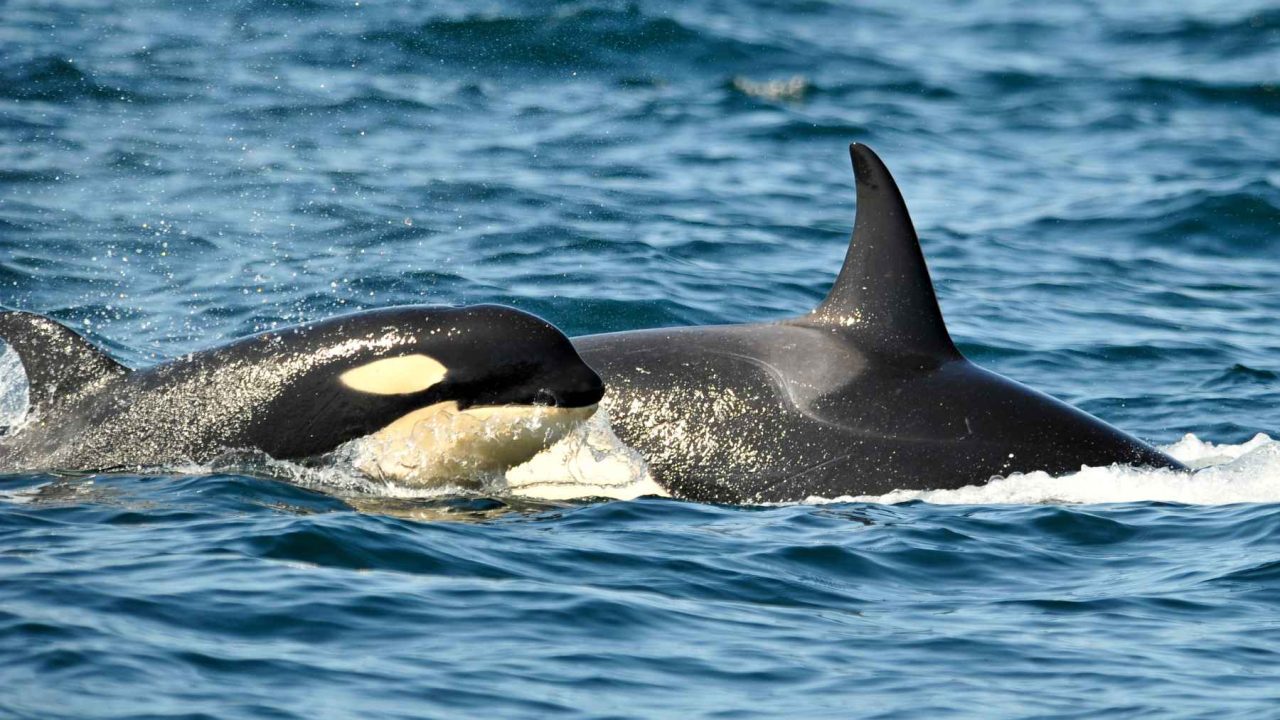
Here’s what you need to know about a startling discovery on a remote Russian island. Scientists have found the first strong physical evidence that killer whales may hunt and eat other killer whales. Two severed orca dorsal fins washed up on Bering Island, off Russia’s Pacific coast, in 2022 and 2024. Both fins bore tooth marks matching the bite pattern of other orcas, not sharks or any other predator. The research team, led by whale biologist Olga Filatova, published their peer-reviewed findings in April 2026. Their most likely explanation is that mammal-hunting transient orcas, known as Bigg’s killer whales, preyed on fish-eating resident orcas. These two ecotypes share the same waters but are genetically distinct and never interbreed. This fundamentally challenges the long-held view that orcas had no natural predators. If you follow marine science, keep an eye on how this reshapes our understanding of orca ecotype interactions going forward.
Fewer than 50,000 killer whales swim the world’s oceans. They sit at the apex of the marine food chain, feared by great white sharks and blue whales alike. No natural predator has ever been confirmed for a healthy adult orca. Until now, scientists never had strong physical evidence that one killer whale would hunt and consume another.
Then two severed dorsal fins turned up on a beach 1.2 miles apart, two years apart, on a windswept island off Russia’s Pacific coast. And everything shifted.
A Photograph from Bering Island That Changed the Conversation
Olga Filatova is a whale biologist at the University of Southern Denmark. She has spent years studying the vocal dialects and social structures of killer whale populations across the North Pacific. In 2022, a colleague sent her a photograph that stopped her mid-scroll.
The image showed a dorsal fin, roughly 19 inches tall, lying on the rocky shore of Bering Island. The island sits at the western end of the Aleutian chain, remote and sparsely inhabited. The fin was severed cleanly from its owner’s body. Deep tooth marks scored its surface.
Filatova’s first instinct was caution. A single fin could mean many things. Boat strikes, entanglement in fishing gear, or post-mortem scavenging could all leave marks on a carcass. She catalogued the find and waited.
Two years later, in 2024, a second dorsal fin appeared on the same stretch of Bering Island shoreline. This one was larger, about 28 inches tall. It bore the same telltale signature: tooth marks consistent with the bite pattern of another orca.
Two fins. Same island. Same type of damage. Filatova and her collaborators, Sergey Fomin and Ivan Fedutin, began to suspect they were looking at something no one had formally documented before.
The Tooth Marks That Pointed to Orca-on-Orca Predation
Killer whale teeth are distinctive. They are conical, interlocking, and designed for gripping rather than chewing. When an orca bites into prey, the marks left behind have a spacing and depth profile that differs from shark bites or propeller wounds. Both fins recovered from Bering Island displayed marks matching this profile.
“Tearing off a fin takes effort and provides little payoff unless feeding is involved.”
— Olga Filatova, University of Southern Denmark
Filatova’s reasoning was straightforward. A dorsal fin is mostly cartilage and connective tissue. It offers almost no caloric reward. If an orca attacked another orca purely out of territorial aggression or social conflict, ripping off the fin would be an unlikely outcome. The effort required suggests the attacker was feeding on the body, and the fin was torn away as a byproduct of consumption.
The peer-reviewed study, published in April 2026, laid out the evidence methodically. The researchers ruled out other marine predators. No shark species in the Bering Sea region produces bite marks matching the patterns found on the fins. The spacing, curvature, and depth all pointed to orca dentition.
Residents Versus Transients: Two Worlds in the Same Water
NOAA Fisheries identifies three main regional ecotypes of North Pacific killer whales. Residents eat fish, primarily salmon. Transients, also called Bigg’s killer whales, hunt marine mammals: seals, sea lions, porpoises, and even other whale species. A third offshore ecotype targets sharks and large fish.
Despite occupying overlapping ranges, residents and transients do not interbreed. A 2018 study published in the Journal of Heredity confirmed deep genetic separation between the two ecotypes. They are, for all practical purposes, on separate evolutionary tracks.
| Characteristic | Resident Orcas | Transient (Bigg’s) Orcas |
|---|---|---|
| Primary Diet | Fish (especially salmon) | Marine mammals |
| Pod Size | Large, stable family groups | Smaller, more fluid groups |
| Vocalizations During Hunting | Frequent echolocation clicks | Often silent to avoid detection |
| Interbreeding | Only within ecotype | Only within ecotype |
| Genetic Divergence | Confirmed by 2018 Journal of Heredity study | |
The distinction matters enormously for interpreting the Bering Island finds. If Bigg’s killer whales view resident orcas as potential prey, it reframes how scientists understand inter-ecotype encounters. Residents are large, intelligent, and travel in groups. Taking one down would require significant coordination and risk.



Leave a Reply