
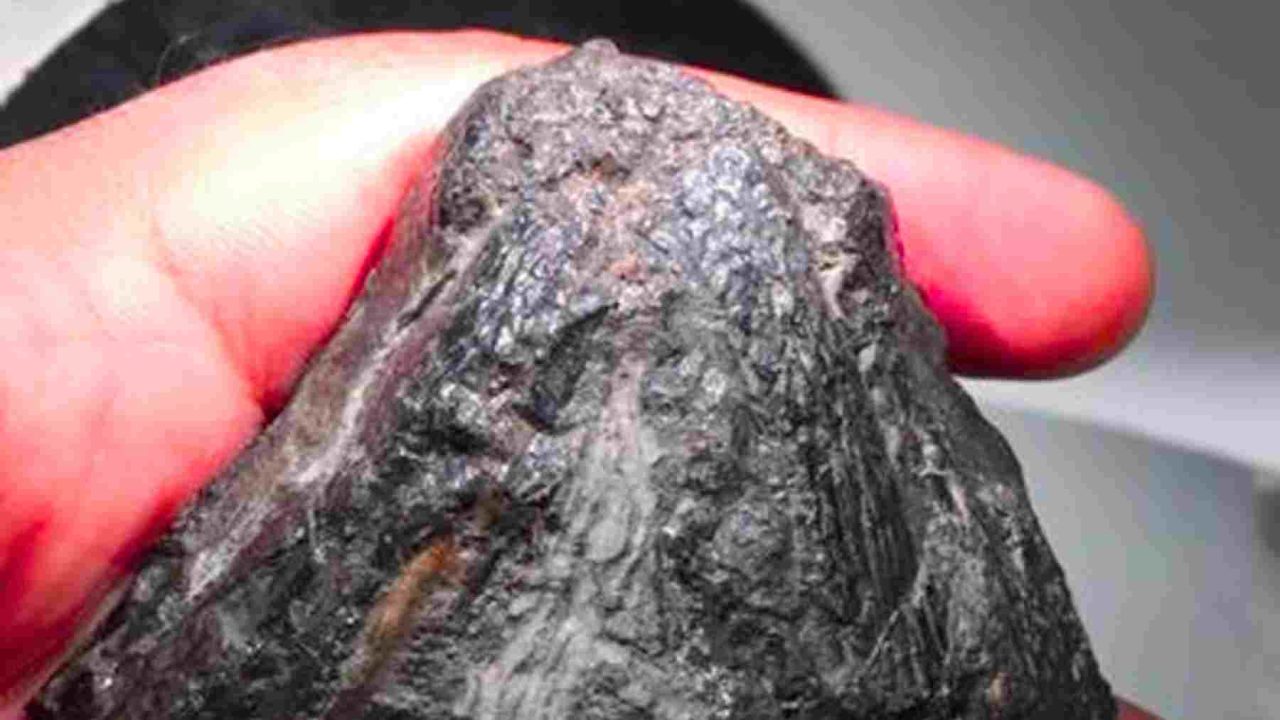
The rock that shattered the assumption came from inside a tree stump. Not a living tree, but a fossilized one, pulled from the ancient soils of Cape Breton Island, Nova Scotia, its rings locked in stone for more than 300 million years.
Inside it sat a skull. Heart-shaped, roughly the size of a soccer ball, and 307 million years old. The creature it belonged to had been dead longer than most people imagine complex animal life has walked on dry land. And yet its teeth told a story nobody expected.
That story is now forcing paleontologists to revise one of the field’s most settled assumptions: that vertebrate animals were late and reluctant arrivals to the business of eating plants.
How Arjan Mann Uncovered the Answer Inside 307-Million-Year-Old Stone
Arjan Mann, Ph.D., a paleontologist at the Field Museum of Natural History in Chicago, was part of the team that formally described and analyzed this fossil in early 2026. The specimen had been recovered from a fossilized tree stump on Cape Breton Island, a detail that matters more than it might first appear.
Ancient tree stumps acted like natural burial chambers. Small creatures crawled inside, died, and were preserved by the same sediment that eventually turned the wood itself to stone. It is a slow, accidental kind of preservation, and it is remarkably effective at protecting fragile anatomy.
In this case, only the head bones survived. But that turned out to be enough.
The team named the creature Tyrannoroter heberti. “Heberti” honors a person connected to the specimen’s recovery. But what the name does not convey is just how strange this animal’s mouth turned out to be.
Rather than the simple, pointed teeth you would expect from an insect-eater or small predator of the Carboniferous period, Tyrannoroter heberti had thick rows of teeth running across its palate. These formed a broad chewing surface extending well beyond the edge teeth lining the jaw margins. Think of it less like a predator’s knife rack and more like a grinding stone laid flat inside the skull.
| Feature | Typical Insect-Eating Tetrapod | Tyrannoroter heberti |
|---|---|---|
| Tooth shape | Pointed, conical | Broad palatal rows |
| Chewing surface | Narrow, edge-focused | Wide, palate-spanning |
| Tooth wear pattern | Puncture marks, shear lines | Grinding facets, polish zones |
| Likely diet | Arthropods, soft prey | Fibrous plant material |
| Gut requirements | Short, simple digestive tract | Large, microbially aided fermentation gut |
What Microscopic Wear Marks on 307-Million-Year-Old Teeth Actually Prove
The most compelling evidence did not come from tooth shape alone. Mann’s team turned to X-ray scanning and high-power microscopy to map wear patterns across each preserved tooth surface. The method is painstaking and precise, tracing scratches and polished zones at scales invisible to the naked eye.
What they found were wear facets: microscopic grooves and smoothed patches etched into the enamel by repeated grinding motion. This is not the pattern left by a creature biting through insect exoskeletons or cracking small bones. The marks matched the motion of something dragging fibrous, resistant material repeatedly across broad, flat surfaces.
Plant material. Specifically, the kind of tough, cellulose-rich vegetation that dominated the Carboniferous period’s vast coal swamp forests.
This biological reality adds another layer to the discovery. If Tyrannoroter heberti was genuinely processing plants, it was not simply chewing differently. Its entire body plan would have had to accommodate a low-energy, high-volume diet requiring long digestion times and microbial partners living inside it. That is a profound physiological transformation, not a minor menu change.
The Carboniferous Timeline That Makes This Find So Disruptive to Established Science
For decades, the prevailing consensus held that land vertebrates were slow to adopt plant-based diets. The Carboniferous period, spanning roughly 359 to 299 million years ago, was long considered dominated by insect-eaters and small predators among the tetrapod lineages. Plants were everywhere, yes, but eating them was assumed to be beyond the physiological reach of early land animals.
Herbivory was thought to have emerged significantly later, once animals had time to evolve the necessary dental complexity, gut architecture, and microbial partnerships across millions of generations. Most estimates placed the reliable origin of vertebrate herbivory well into the Permian period, around 280 to 260 million years ago.
Tyrannoroter heberti complicates that timeline sharply. At 307 million years old, it predates those estimates by at least 25 million years, possibly more depending on what future fossil evidence reveals.
The researchers also raised a compelling hypothesis about how the evolutionary pathway may have unfolded. Among tetrapods, the transition to plant eating may have run through insects as an intermediate step. A creature eating insects was already consuming organisms that fed on plants, including plant matter still present in insect guts at the time of consumption.
Over generations, shifting from insect prey to direct plant consumption might have been a smaller physiological leap than previously imagined. That reframing changes the question from “how did animals suddenly start eating plants?” to “how did a dietary shift already underway accelerate into full herbivory?” These are very different evolutionary problems, with very different implications.
Why a Fossilized Tree Stump on Cape Breton Island Holds the Key to Coal Swamp Ecology
The location of the find matters for reasons well beyond geography. Cape Breton Island sits within what was, 307 million years ago, a dense equatorial coal swamp. The Carboniferous world was lush with towering club mosses, giant tree ferns, and early seed plants stretching across vast lowland basins. Oxygen levels were higher than today. Insects grew to enormous sizes. The environment was both extraordinarily productive and intensely competitive.
For a small, soccer-ball-sized tetrapod to carve out a life in this world, it needed a workable niche. Active predation was risky against armored arthropods and larger contemporaries. Plants, by contrast, were dense, stationary, and available in quantities no animal could exhaust. If a creature could evolve the anatomy and gut biology to process them efficiently, the caloric payoff was enormous.
“A chunky, squat creature that roamed Earth 307 million years ago is helping scientists understand how plant-eating animals first appeared on land.”
— Smithsonian Magazine, February 2026
The tree stump where Tyrannoroter heberti died may have been a shelter, a foraging spot, or simply a place it crawled into and could not escape. The circumstances of its death remain unknowable. But it lived in a forest thick with the very food its teeth were built to process, and there is a strange symmetry in that fact.
Fossil evidence is always incomplete. Only the skull bones were preserved in this specimen, meaning body size estimates rest on inference, and soft tissue anatomy including gut structure remains entirely speculative. Scientists frame this as strong evidence rather than definitive proof, and that caution is scientifically appropriate.
But strong evidence, grounded in microscopic wear analysis and comparative dental anatomy, is precisely how paleontology revises its assumptions. In this case, the revision is substantial.
What Tyrannoroter heberti Means for the Bigger Architecture of Animal Evolution
The emergence of herbivory was not a trivial event in the history of life on land. Herbivorous animals form the base of nearly every terrestrial food web. They convert plant energy into animal tissue, making it available to predators. Without them, terrestrial ecosystems could not sustain the complexity and diversity the fossil record documents across hundreds of millions of years.
If herbivory arrived earlier than textbooks have described, then the ecological communities of the Carboniferous were more complex and energetically sophisticated than assumed. There were not just predators and insect-eaters populating those coal swamp forests. There were dedicated plant consumers, running energy up the food chain from the vast green biomass surrounding them on all sides.
That possibility shifts how we understand ancient ecosystem structure: how energy moved through Carboniferous communities, what made them as diverse as the fossil record suggests, and why some lineages succeeded where others did not.
It also opens questions that may take decades of additional excavation to answer. How widespread was early herbivory among Carboniferous tetrapods? Were there other plant-eating animals from this period whose fossils simply have not been found yet, or have been misidentified? Did the pathway from insect-eating to plant-eating happen once, or multiple times independently across different lineages?
Tyrannoroter heberti cannot answer all of those questions. But a soccer-ball-sized skull preserved inside a tree stump for 307 million years has at least ensured we will spend the next generation of research asking them.
Some of the most important discoveries in science are not grand revelations announced from laboratory stages. They are small skulls in unexpected places, quietly contradicting what everyone assumed they already knew, waiting three centuries of millions of years for someone to look closely enough at their teeth.
Frequently Asked Questions

You Might Also Like

Magnetic Cement Invented by 29-Year-Old Could End Nails and Screws Forever
Argentine inventor Marco Secchi created Ironplac, a magnetic cement that lets walls hold objects without…

The Psychology Behind Dark Houses at Christmas
Psychology research reveals why people who skip Christmas lights aren't cold or antisocial. They may…

The Tupperware-Sized Box That Could Revolutionize Space Mining
A Tupperware-sized box and hungry microbes on the ISS extracted metals from a real meteorite.…
Leave a Reply