
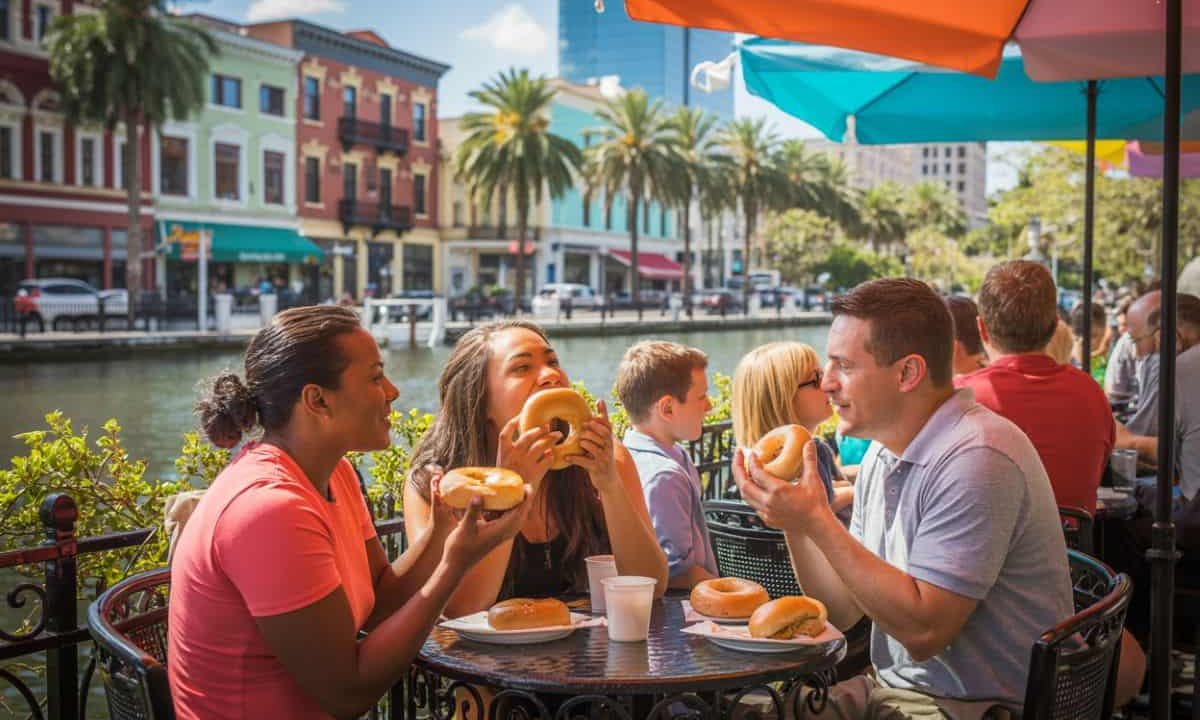
Tampa, Florida is quietly becoming one of the Gulf Coast’s most compelling food destinations — and the city’s growing artisan bagel scene is a surprisingly perfect lens through which to understand it. Cuban and Spanish heritage have shaped Tampa’s culinary identity for generations, and today that rich cultural foundation is blending with newer food traditions to create something genuinely worth traveling for.
Whether you’re a first-time visitor or someone who’s been to Tampa before and mostly stuck to the waterfront, the city’s neighborhoods offer far more than beach views. Pairing a morning bagel run with afternoon cultural sightseeing turns out to be one of the better ways to actually experience what Tampa has become.
The city’s food scene, long defined by Cuban sandwiches and Spanish-influenced dishes, now includes a growing number of artisan bagel shops that have found their footing in Tampa’s vibrant local neighborhoods — and they’re drawing both residents and travelers looking for something beyond the usual Florida fare.
Why Tampa’s Food Scene Is More Layered Than Most Visitors Expect
Tampa’s reputation as a food city has traditionally centered on Ybor City, the historic neighborhood where Cuban immigrants settled in the late 1800s and built a cigar-rolling industry that defined the city for decades. That history never left — it’s still baked into the architecture, the restaurants, and the community identity of the area.
But Tampa has grown significantly beyond that single cultural thread. The city’s culinary diversity now reflects waves of immigration and influence from across the Caribbean, Latin America, and beyond. Artisan food culture — the kind that produces small-batch bagels, specialty coffee, and locally sourced ingredients — has taken hold in several neighborhoods, adding a new layer to what Tampa offers visitors.
What makes this interesting for travelers is that the bagel shops aren’t isolated from Tampa’s broader culture. They tend to sit within neighborhoods that also contain historic sites, local museums, and waterfront areas worth exploring. The food and the sightseeing are genuinely connected here in a way that rewards a slower, more deliberate kind of travel.
Tampa’s Culinary and Cultural Landscape at a Glance
For travelers planning a visit, understanding the shape of Tampa’s food and cultural geography helps make the most of limited time. The city’s offerings break down roughly along neighborhood lines, with distinct characters in different areas.
| Area / Feature | What It Offers | Why It Matters for Visitors |
|---|---|---|
| Ybor City | Historic Cuban and Spanish cultural district | Foundation of Tampa’s culinary and immigrant heritage |
| Artisan Bagel Shops | Growing number of small-batch bagel producers | Reflects newer food culture layered over historic traditions |
| Local Museums | Cultural institutions tied to Tampa’s history | Provide context for the city’s diverse communities |
| Gulf Coast Waterfront | Coastal scenery and waterfront neighborhoods | Defines Tampa’s physical identity and outdoor appeal |
| Cuban and Spanish Culinary Tradition | Long-established food heritage across the city | Shapes the broader food culture within which bagel shops operate |
How Bagels Fit Into Tampa’s Broader Culinary Story
It might seem unexpected that bagels — a food most closely associated with New York Jewish deli culture — would become a meaningful part of Tampa’s food identity. But that’s part of what makes the city’s scene interesting. Tampa has always been a place where immigrant food traditions arrive, take root, and eventually become local.
The artisan bagel movement fits within that pattern. Small shops are producing bagels with care and craft, and they’re doing it within a city that already understands what it means for food to carry cultural weight. For travelers, this means a bagel breakfast in Tampa can be genuinely good — not just a convenience stop, but a worthwhile experience in its own right.
Pairing that experience with visits to local cultural institutions and historic neighborhoods makes for a full day that covers both the city’s past and its evolving present. Tampa’s museums and historic districts provide the context; the food scene provides the texture.
Planning a Tampa Visit Around Food and Culture
The most satisfying Tampa itineraries tend to move between neighborhoods rather than staying in one place. Starting a morning at an artisan bagel shop, then spending time in Ybor City or near one of the city’s cultural institutions, covers a lot of ground without feeling rushed.
Tampa’s waterfront areas offer a natural endpoint to a day spent exploring — the Gulf Coast scenery is genuinely striking, and the city’s coastal character is as much a part of its identity as its food traditions. Travelers who treat the waterfront as a destination rather than just a backdrop tend to leave with a fuller sense of what Tampa actually is.
The city rewards curiosity. Its culinary diversity isn’t just a marketing claim — it’s visible in the neighborhoods, the menus, and the cultural institutions that have preserved Tampa’s history while making room for new influences.
Frequently Asked Questions
Is Tampa known for its food scene?
Yes. Tampa has a well-established culinary identity rooted in Cuban and Spanish heritage, and that foundation has expanded to include a growing artisan food culture that includes specialty bagel shops and other craft food producers.
Why are bagels becoming popular in Tampa?
A growing number of artisan bagel shops have opened in Tampa’s neighborhoods, reflecting the city’s broader trend toward craft food culture layered over its existing culinary traditions.
What neighborhoods are worth visiting in Tampa for food and culture?
Ybor City is central to Tampa’s cultural and culinary history given its Cuban and Spanish immigrant heritage.
Can you combine food and sightseeing in Tampa?
Yes. The city’s artisan bagel shops, local museums, historic districts, and Gulf Coast waterfront areas are well-suited to a combined food and cultural itinerary.
What cultural influences shape Tampa’s food scene?
Cuban and Spanish heritage are the dominant historical influences, though Tampa’s culinary scene has grown to reflect a wider range of cultural traditions over time.
Is Tampa’s waterfront worth visiting?
Tampa sits on Florida’s Gulf Coast and its waterfront areas are considered a defining part of the city’s identity, offering coastal scenery that complements its food and cultural attractions.




Leave a Reply