
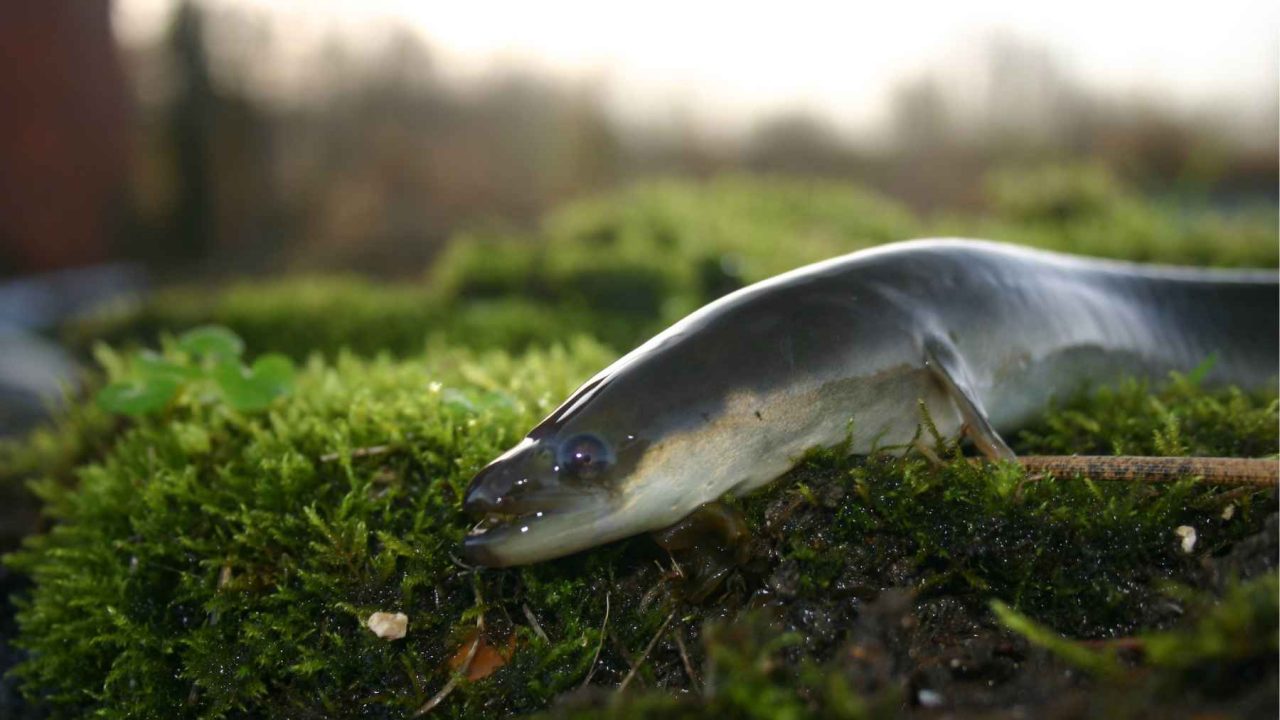
Europe’s Most Mysterious Fish Is Disappearing — and Spain’s Eel Industry Could Be the First to Go
Somewhere in the depths of the Sargasso Sea, in a patch of warm Atlantic water east of the Bahamas, European eels spawn and die. Nobody has ever witnessed it. No researcher has ever caught a spawning adult in that remote stretch of ocean. The entire reproductive act of Anguilla anguilla — one of Europe’s most economically and ecologically significant fish — remains unseen by human eyes.
That mystery has made the European eel difficult to protect. It has also made the scale of its collapse all the more alarming. The species is now listed as Critically Endangered on the IUCN Red List, and on February 17, 2026, Spain’s State Committee for Flora and Fauna received a formal proposal to list the European eel as “in danger of extinction” under Spanish national law. If approved, the designation could trigger a complete ban on eel fishing across the country — a prospect that has sent shockwaves through a fishing sector with deep cultural and commercial roots.
A Species Built for Epic Journeys
To understand why the European eel’s decline is so hard to reverse, you need to understand how the animal lives. Its life cycle is one of the most extraordinary in the vertebrate world — a decades-long arc that crosses thousands of kilometers of ocean and requires a precise chain of biological and environmental conditions, every one of which is now under threat.
Adult eels spend between 10 and 30 years in freshwater rivers, lakes, and estuaries across Europe and North Africa. They grow slowly, sometimes reaching over a meter in length and living far longer than most freshwater fish. When they finally reach sexual maturity — a process still not fully understood — they undergo a dramatic physical transformation. Their eyes enlarge, their digestive systems atrophy, their coloring shifts from yellow-brown to silver. Then they leave.
The migration to the Sargasso Sea covers roughly 6,000 to 7,000 kilometers. The eels navigate open ocean, cross the Mid-Atlantic Ridge, and travel through water temperatures and depths that shift dramatically along the route. They do not eat during this journey. They arrive at the spawning grounds, reproduce, and die — all without a single confirmed human observation of the event.
Their larvae, called leptocephali, then drift back across the Atlantic on the Gulf Stream and North Atlantic Current. The journey takes roughly a year. As they approach European coastlines, the larvae metamorphose into glass eels — tiny, transparent, finger-length juveniles that swarm into estuaries and river mouths. These glass eels are the visible face of eel recruitment, and their numbers have become the primary metric by which scientists track the species’ health. What those numbers now show is catastrophic.
The Threats Stacking Against a Single Species
The European eel does not face one existential threat. It faces several, operating simultaneously across every phase of its life cycle. Disentangling their individual contributions to the decline has occupied marine biologists for decades, and the honest scientific answer is that all of them matter.
Habitat loss and river fragmentation sit at the top of most researchers’ lists. Europe’s rivers have been dammed, diverted, and channeled on an industrial scale over the past century. Weirs, hydroelectric turbines, and irrigation barriers block the upstream migration of juvenile eels and kill silver eels on their downstream return. A single hydroelectric turbine can have mortality rates of 30 to 60 percent for passing eels, depending on its design. Multiply that across hundreds of barriers on a single river system and the cumulative toll becomes devastating.
Water quality is a compounding factor. Agricultural runoff, industrial discharge, and urban pollution have degraded the freshwater habitats that eels depend on for the bulk of their lives. Eels accumulate fat-soluble pollutants — PCBs, dioxins, flame retardants — over their long freshwater residence, which may impair reproductive success even among eels that complete the migration.
The parasitic nematode Anguillicoloides crassus, accidentally introduced to European waters from Asia in the 1980s through imported Japanese eels, infests the swim bladder of Anguilla anguilla. A healthy swim bladder is essential for the deep-water spawning migration. Heavily parasitized eels may lack the physiological capacity to reach the Sargasso Sea at all.
Then there is the ocean itself. Changes in the Atlantic Meridional Overturning Circulation — the vast system of currents that includes the Gulf Stream — appear to be affecting larval drift patterns. If larvae are carried off their historic routes to European estuaries, recruitment fails before fishing pressure or habitat quality even enters the equation.
Spain’s Industry Confronts an Uncertain Future
Spain has long been one of Europe’s most significant eel-fishing nations. The tradition is particularly entrenched in the Valencian Community, where glass eels — called angulas — have been harvested for generations from river mouths and coastal lagoons. Angulas are a delicacy that once appeared on working-class tables in the Basque Country and Valencia. Decades of overfishing and population decline pushed prices so high that they became luxury items, now selling for hundreds of euros per kilogram. That price signal alone reflects the scarcity driving the current crisis.
The proposal submitted to Spain’s State Committee for Flora and Fauna on February 17, 2026 seeks to reclassify the European eel under Spain’s national endangered species framework. A listing “in danger of extinction” is the highest level of protection available under Spanish law. It would not merely regulate eel fishing — it would create the legal foundation for banning it entirely.
For fishing communities in the Albufera de Valencia, the Ebro Delta, and along the Cantabrian coast, the prospect carries both economic and cultural weight. Eel fishing is woven into local identity in ways that transcend simple income calculation. It shapes seasonal rhythms, family traditions, and culinary heritage that stretch back centuries.
“The eel is not just a fish for us. It is the river itself. To lose the right to fish it is to lose something that cannot be explained in euros.”
— A Valencian eel fisherman speaking to regional press, early 2026
Industry representatives argue that recreational and commercial eel fishing, properly managed, is not the primary driver of collapse. They point to habitat degradation, barriers to migration, and ocean-scale changes as the dominant causes — factors that a fishing ban does nothing to address. The argument is not entirely without scientific support. Ending all fishing pressure on a population experiencing 1% recruitment rates in the North Sea will not restore river connectivity or reverse ocean current changes.
But conservation biologists counter that every additional mortality event — from any source — matters when a population is this close to functional collapse. A species that produces almost no viable juveniles cannot absorb any additional pressure on its adult stock.
The Regulatory Landscape Across Europe
Spain’s proposed national listing does not occur in a regulatory vacuum. The European Union has operated an Eel Regulation since 2007, requiring member states to produce national Eel Management Plans designed to allow at least 40% of the silver eel biomass to escape to the sea to spawn. Implementation has been uneven. ICES — the International Council for the Exploration of the Sea — has repeatedly recommended zero catch of European eel at the EU level, advice that member states have consistently declined to follow in full.
| Factor | Impact on Eel Population | Reversibility |
|---|---|---|
| River barriers / hydropower | Blocks upstream migration; kills downstream migrants | Moderate (costly, slow) |
| Water pollution / habitat degradation | Reduces freshwater habitat quality | Moderate (regulatory effort) |
| Anguillicoloides crassus parasite | Damages swim bladder; impairs spawning migration | Low (established invasive) |
| Ocean current changes (AMOC) | Disrupts larval drift to European coasts | Very low (climate-linked) |
| Commercial and recreational fishing | Direct removal of adults and juveniles | High (immediately reversible) |
Several EU member states have already implemented seasonal or partial bans. France restricted glass eel fishing significantly in recent years. The Netherlands and Germany have moved toward more aggressive measures. Spain has historically maintained a glass eel fishery under quota management, with a portion of the catch diverted to restocking programs that release juveniles into river systems. Whether restocking meaningfully contributes to population recovery or simply provides regulatory cover for continued harvest is a matter of ongoing scientific debate.
What a Ban Would and Would Not Achieve
A complete ban on eel fishing in Spain would remove one source of mortality from a critically depleted population. It would protect adult silver eels in Spanish river systems from harvest on their final downstream migration. It would stop the commercial take of glass eels from Spanish estuaries. These are not trivial gains for a species at this level of depletion.
What a ban cannot do is address the underlying structural causes of the collapse. The thousands of barriers fragmenting Spanish river systems — the Ebro alone has over 200 registered dams and weirs — will remain in place. The agricultural runoff contaminating the Albufera and other coastal lagoons will continue without separate regulatory action. The parasite already endemic in European eel populations will not disappear. The ocean will continue changing.
Recovery, if it comes, will require action across all these fronts simultaneously — fish passes on priority barriers, improved water quality enforcement, potential parasite management, and strict harvest restrictions held in place for decades, not years. The European eel spends up to 30 years in freshwater. A management intervention implemented today will not produce a measurable increase in spawning adults until the 2050s at the earliest.
The Decision Ahead
Spain’s State Committee for Flora and Fauna now holds a proposal that has been building in ecological urgency for years. The science behind it is not contested. Glass eel recruitment at 1% of historic levels is not a projection or a model output — it is a measured collapse, documented across decades of monitoring data. The IUCN’s Critically Endangered listing reflects the same reality. The question before the committee is not whether the European eel is in crisis. It is whether Spain is prepared to act on what that crisis demands, and at what cost to the communities whose livelihoods rest on the answer.
Whatever the committee decides, the European eel will continue its ancient migration — or fail to. In the Sargasso Sea, amid floating sargassum weed in water that no research vessel has successfully surveilled for spawning adults, the fish will either find each other or they will not. Thousands of years of evolutionary precision, compressed into a life cycle that spans continents and ocean basins, now depends on decisions being made in committee rooms in Madrid.
The last European eel to spawn successfully in the Sargasso Sea may already be swimming downriver toward the sea — and nobody yet knows if another one is coming behind it.




Leave a Reply