
▶ Read transcript
Here’s what you need to know about the hidden grief of losing friends as you get older. Nearly 43 percent of adults over 60 report feeling lonely, and a quarter of Americans 65 and older are considered socially isolated. But here’s the part that’s sparking real debate among psychologists: many of those lost friendships may not have been as mutual as people thought. Some researchers argue the friendships simply faded for practical reasons — retirement, distance, health changes. Others say something more painful is happening: one person was doing all the work all along, and the moment they stopped reaching out, the friendship disappeared. That specific sting, realizing the connection was one-sided, is its own kind of grief. So here’s your takeaway: if you’re in your 50s or 60s, now is a good time to honestly notice which friendships flow both ways — and invest more intentionally in those ones before the window closes.
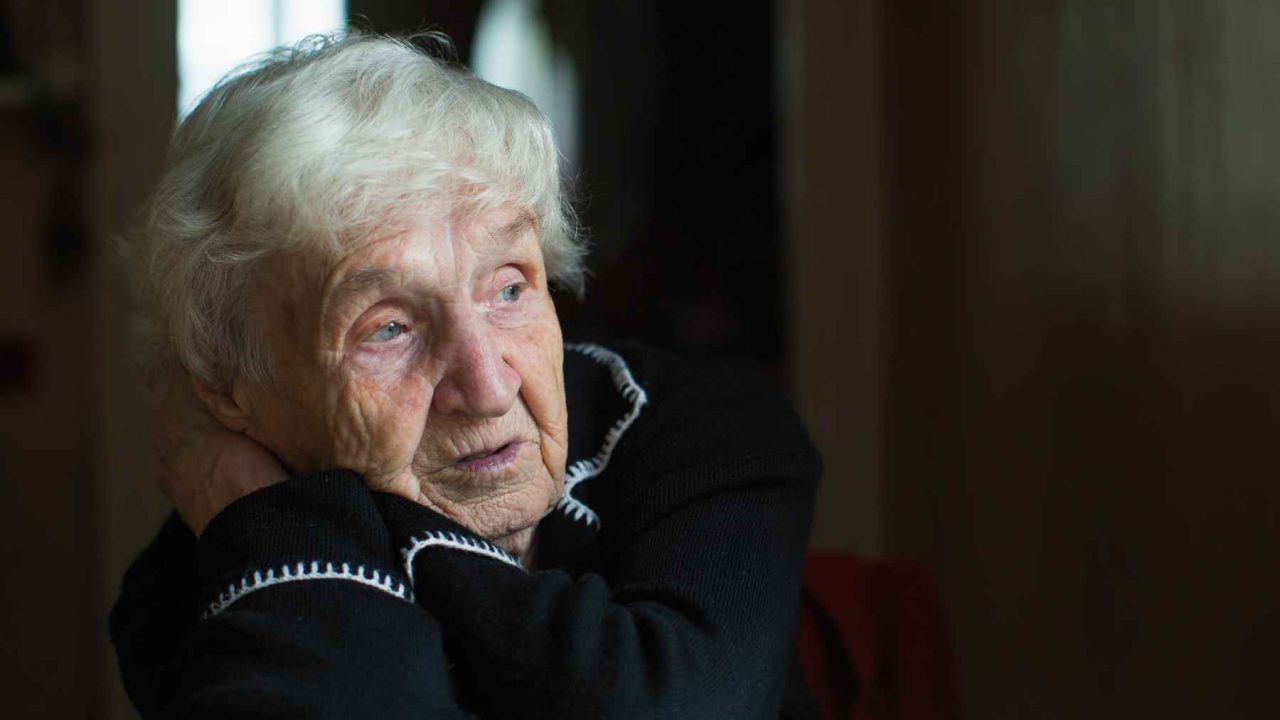
There is a window closing right now, and most people don’t notice it until it’s already shut. Researchers have been tracking it for years, and the numbers are stark: 43% of adults aged 60 and older report feeling lonely, according to a National Academies report on social isolation. Nearly a quarter of Americans 65 and older are considered socially isolated. These aren’t people who chose solitude. Many of them had full social lives. The question haunting psychologists right now is: what happened to all those friendships?
The answer is uncomfortable. And it’s sparking a genuine debate inside psychology about the nature of adult friendship, the ethics of emotional labor, and whether the loneliness epidemic in aging is really about loss — or about a painful kind of clarity.
The Debate Splitting Psychologists on Adult Friendship and Aging
On one side, researchers argue that friendship attrition in later life is simply a structural problem. Schedules change. Health declines. Geographic distance grows. People retire and lose the proximity that held relationships together. This view treats loneliness as a logistical failure, something addressable with community programs and social infrastructure.
On the other side, a growing body of research suggests the problem runs deeper. Some psychologists argue that many adult friendships were never genuinely reciprocal. They were sustained by one person’s consistent effort, and the moment that person stopped initiating, the friendship dissolved. The loneliness that follows isn’t just grief over lost connection. It’s the specific sting of realizing the connection was asymmetrical from the start.
This isn’t a minor academic squabble. How we answer this question shapes everything from how we design elder care to how individuals process the grief of fading friendships in their 50s, 60s, and beyond.
| View | Core Claim | Proposed Solution |
|---|---|---|
| Structural View | Friendships fade due to logistics: health, distance, retirement | Community programs, senior centers, digital connection tools |
| Relational Equity View | Many friendships were never mutual; one person did all the emotional work | Psychological literacy about reciprocity; grief processing; relationship auditing |
| Developmental View | Friendships are context-bound and meant to evolve or end | Reframing expectations; accepting seasonal relationships |
Why the Structural Argument Has Real Psychological Weight
Researchers Aaron M. Ogletree and Rebecca G. Adams, who studied later-life friendship dynamics, documented how the conditions that make friendship easy, shared space, routine contact, overlapping schedules, quietly erode after midlife. When those scaffolds disappear, so do the relationships built on them.
This matters because loneliness is formally defined not as being alone, but as a felt gap between the relationships you want and the relationships you actually have. That gap can widen for purely practical reasons. A friend moves to be near grandchildren. A colleague retires to another state. A neighbor’s health declines. None of this requires anyone to be a bad friend. Life just reorganizes itself, and connection becomes harder to maintain.
Supporters of the structural view point out that older adults in communities with strong social infrastructure, walkable neighborhoods, intergenerational housing, and active senior programs report significantly lower loneliness. The problem, they argue, is environmental, not personal.
“Loneliness can grow with age for a lot of understandable reasons. Some are practical, like schedules and health. Some are emotional, like grief.”
— Cottonwood Psychology
This framing offers something important: it removes blame from the individual. You aren’t lonely because you were a bad friend or chose the wrong people. You’re lonely because the structures that held relationships together were dismantled by time.
The Reciprocity Research That Challenges That Comfort
Here is where the data gets genuinely unsettling. A landmark study led by Abdullah Almaatouq at MIT mapped self-reported friendships across multiple large datasets. The finding was striking: only about 53% of friendship ties were reciprocal. In other words, roughly half the time, when someone said a person was their close friend, that person did not feel the same way.
This research, published in PLOS ONE, wasn’t specifically about aging. But its implications for older adults are profound. If nearly half of all perceived friendships are unreciprocated even in younger populations, what happens as people age and the social glue of proximity and routine disappears? The answer, psychologists suggest, is that the asymmetry becomes visible. The friend who never initiated contact doesn’t suddenly start. They simply drift away, because the person doing the work has stopped.
18–22 meaningful exchanges
~90% response rate
12–15 close or semi-close friends
6–8 per month
High — 74% report feeling connected
2–3 out of 15
4–6 hours of outreach effort
3–5 meaningful exchanges
~88% still respond when reached
2–4 genuinely reciprocal friends
0–1 per month
Low — 43% report feeling lonely
2–3 out of 15 (unchanged)
Near zero — network largely dormant
Equity theory, first developed by J. Stacy Adams and later applied to close relationships by Elaine Hatfield, predicts exactly this outcome. When one person consistently contributes more emotional labor, more initiation, more care, the relationship is inherently unstable. It persists only as long as the over-contributor keeps going. The moment they pause, the imbalance reveals itself.
Unlike marriages, business partnerships, or even roommate arrangements, friendships have no formal structure, no obligation, no shared paperwork. They exist entirely on goodwill and effort. That makes them uniquely vulnerable to the person who quietly carries most of the weight.
What Objective Research Actually Shows About Aging and Relational Asymmetry
The data doesn’t fully vindicate either camp. Both forces are real, and they interact in ways that compound the pain.
More than 30% of adults over 45 experience loneliness, according to research cited in the National Academies report. That number climbs to nearly 24% experiencing full social isolation by age 65. These figures suggest a systemic problem, not just individual relational failures.
But the MIT reciprocity data, combined with equity theory research, points to something the structural view misses. Even when older adults have access to community programs and social opportunities, many report that the connections feel hollow or one-sided. They show up. They initiate. Others attend but don’t follow through. The infrastructure exists, but the mutuality doesn’t.
This distinction matters enormously for intervention design. Programs that increase social contact without addressing relational quality may reduce isolation statistics without touching the deeper loneliness. You can be surrounded by people and still feel invisible, if you’re the one who always reaches out first.
The Editorial Position: Both Truths Must Be Held at Once
The structural argument is correct that environment shapes friendship. Proximity, routine, and shared purpose are genuine ingredients of connection. When they disappear, even healthy friendships require more deliberate effort to survive. That’s not a character flaw. It’s physics.
But the relational equity argument is also correct, and ignoring it does real harm. When an older adult feels the specific grief of realizing a decades-long friendship was largely sustained by their own effort, telling them it’s just logistics is dismissive. That grief deserves a name. Psychology gives it one: it’s the pain of discovering that what felt like mutual care was actually a transaction, with one party doing most of the paying.
The most honest reading of the research is this: structural barriers make friendship harder in later life, and they fall on top of relational asymmetries that were always present but masked by proximity and routine. Aging doesn’t create one-sided friendships. It reveals them.
What This Debate Means for How We Age, Grieve, and Connect
The implications are significant, both personally and at a policy level. For individuals, the research suggests that the grief of fading friendships in later life deserves the same psychological seriousness as other forms of loss. It is not self-pity. It is an accurate perception of something real.
For clinicians and counselors working with older adults, the reciprocity data offers a framework for helping clients distinguish between friendships worth investing in and patterns worth releasing. Not every faded connection represents a failure. Some represent clarity.
For policymakers and community designers, the data argues for programs that don’t just increase contact but cultivate genuine reciprocity: peer mentorship models, structured mutual aid networks, and intergenerational programs built around shared contribution rather than passive attendance.
And for anyone in midlife watching certain friendships quietly thin out, the research offers something unexpected: permission. Permission to stop doing all the work, not as an act of bitterness, but as an honest test of what was actually there. Some friendships will surprise you. Others will confirm what some part of you already knew.
The loneliest part of growing old may not be the silence that follows. It may be the clarity that precedes it.
Frequently Asked Questions
Frequently Asked Questions

You Might Also Like
Your Tea Bag Is Releasing Billions of Plastic Particles Into Every Cup
New research finds a single tea bag can release up to 14.7 billion microplastics into…

NASA Spots a 50-Kilometer Eye Staring Back from the Sahara
NASA's ISS imagery spotlights the Richat Structure, a 50-km geological eye in Mauritania's Sahara. Not…

The Mountains Beneath Earth Dwarf Everest by 100 Times
A 2025 Nature study reveals two underground structures beneath Africa and the Pacific rising 1,000…
Leave a Reply