
Roughly 63 percent of homes in urban American neighborhoods test positive for cockroach allergens in dust samples. That number climbs higher in low-income housing, where infestations go untreated for months or years. For the families living inside those walls, the consequences are not just psychological.
María had known about the roaches in her apartment for three months before she finally started tracking them at night. She was a nursing student in Chicago, sharing a two-bedroom unit with a roommate, a tight budget, and apparently, dozens of uninvited tenants.
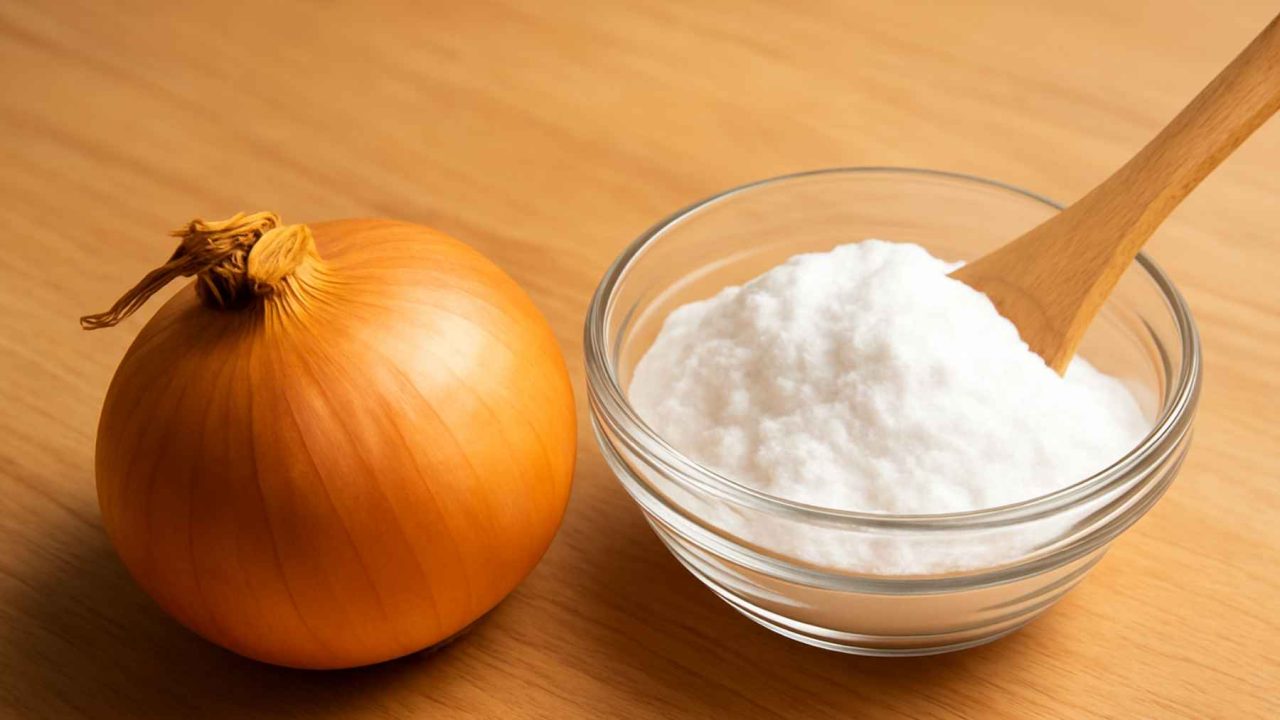
She couldn’t afford an exterminator. A standard professional pest control visit runs between $150 and $300 for a single treatment, and her landlord had stopped responding to texts around the time the heating had gone out in January. So she started reading. And somewhere between a Reddit thread and a YouTube comment, she found a suggestion that sounded, at first, like something her grandmother would have muttered over a pot of stew: chopped onion mixed with baking soda, left in a dish near the baseboards.
When Kitchen Ingredients Become Chemistry Equipment
The onion-and-baking-soda bait is not new. Versions of it have circulated in home remedy communities for decades, often passed down without any explanation beyond “it works.” But the mechanism behind it is genuinely interesting chemistry, not folklore.
Cockroaches are drawn to onions because of the volatile sulfur compounds they release: propanethial S-oxide, disulfides, and similar molecules that insects associate with fermentation and decomposition. To a cockroach, a pungent, moist piece of onion signals food. The baking soda is the trap hidden inside the invitation.
Once ingested, sodium bicarbonate encounters stomach acids and begins producing CO2. The insect has no physiological mechanism to expel that gas. Pressure builds. Internal organs are compressed and damaged. The exoskeleton, which cockroaches depend on for structural integrity and moisture retention, is compromised. Death follows, though not instantly.
The onion serves two purposes: it attracts the cockroach, and its moisture keeps the baking soda from drying out and losing contact appeal. Recipes sometimes add a small amount of sugar for extra draw, since cockroaches are strongly motivated by carbohydrate sources.
| Bait Component | Role in the Trap | Chemistry Involved |
|---|---|---|
| Chopped Onion | Attractant and moisture source | Volatile sulfur compounds (propanethial S-oxide, disulfides) |
| Baking Soda | Lethal agent | Sodium bicarbonate reacts with stomach acid, producing CO2 gas |
| Sugar (optional) | Secondary attractant | Carbohydrate scent signal; strongly motivates foraging behavior |
| Daily Refresh | Maintains effectiveness | Keeps moisture and volatile compounds active; dry bait loses draw |
A Field Study That Took This Seriously
This is not purely anecdotal. Researchers conducted a field study in Ghana testing traps baited with peanut butter or sugar mixed with baking soda, placing them in kitchens, storerooms, and a student bedroom. The results showed that baking soda mixtures killed significantly more German and American cockroaches compared with traps containing food attractants alone.
That distinction matters. Both trap types drew cockroaches. Only the baking soda traps killed them in meaningful numbers. The study gave a scientific frame to something that home practitioners had been observing for years without the vocabulary to explain it.
María placed three small dishes along the kitchen baseboard and one near the bathroom sink, where she had seen the most activity. She refreshed the onion and baking soda mixture every day, as she had read it needed to stay moist to remain effective. Within four days, she noticed fewer roaches at night. Within two weeks, the population had visibly declined.
She kept a rough count: before the bait, she was seeing 12 to 15 roaches per night in the kitchen during a 20-minute observation window. After three weeks, that number was down to two or three. It wasn’t eradication, but it was significant.
The Health Stakes Are Real
The reason this matters beyond inconvenience comes down to air quality. A team at North Carolina State University found that homes with heavy cockroach infestations had much higher concentrations of airborne allergens and bacterial endotoxins. When professional pest control eliminated the roaches, those airborne markers dropped sharply.
Cockroaches carry bacteria, fungi, and parasites. Their shed skins, droppings, and saliva are recognized indoor allergens that trigger asthma, particularly in children. A cockroach infestation is not a nuisance; it is a chronic respiratory health risk embedded in the structure of the home itself.
The U.S. Environmental Protection Agency promotes what it calls integrated pest management, a layered approach that combines cleaning, structural sealing, and targeted low-toxicity interventions. The onion-baking soda bait fits within that framework conceptually: it’s low in chemical toxicity to humans, targets the pest directly, and requires no specialized equipment.
It is not, however, a complete solution on its own. Cockroaches breed fast and hide deep inside wall voids, behind refrigerators, and beneath dishwashers. A surface bait reduces visible populations but does not address harborage.
Why the “Magic” Label Stuck
There is a long history of practical chemistry being mistaken for the supernatural. Researchers writing in Chemistry World have traced many historical “witchcraft” practices to genuine plant chemistry: alkaloids, antimicrobials, psychoactive compounds that produced real effects and baffled observers who had no framework to explain them. The accused witch who kept pests out of a neighbor’s grain store may have simply understood which smells and substances repelled which insects.
“Many so-called magical practices and potions used by accused witches were based on plant chemistry that produced real, observable effects.”
— Chemistry World, on historical witchcraft and chemistry
The onion-baking soda remedy carries that same flavor of inherited knowledge stripped of its explanation. Someone learned it worked. They passed it on. The mechanism got lost, and what remained was a recipe that sounded strange enough to be dismissed as superstition, or embraced as folk magic, depending on who was listening.
The chemistry was always there. It just wasn’t being named.
María graduated in May 2025. She moved out of the Chicago apartment in the spring, into a place with actual functioning heat and a landlord who returned calls. The roaches, she said, were only part of the story. But she kept the baking soda mixture in her mental toolkit, the way her mother had kept vinegar and salt for different household problems: not magic, not mystery, just chemistry she happened to know.
What’s harder to shake is the question that stays after the roaches are gone: how many people are managing genuine public health risks with pantry ingredients because the formal solutions are financially inaccessible? And what does it say that the chemistry works either way, whether you understand it or not?



Leave a Reply