
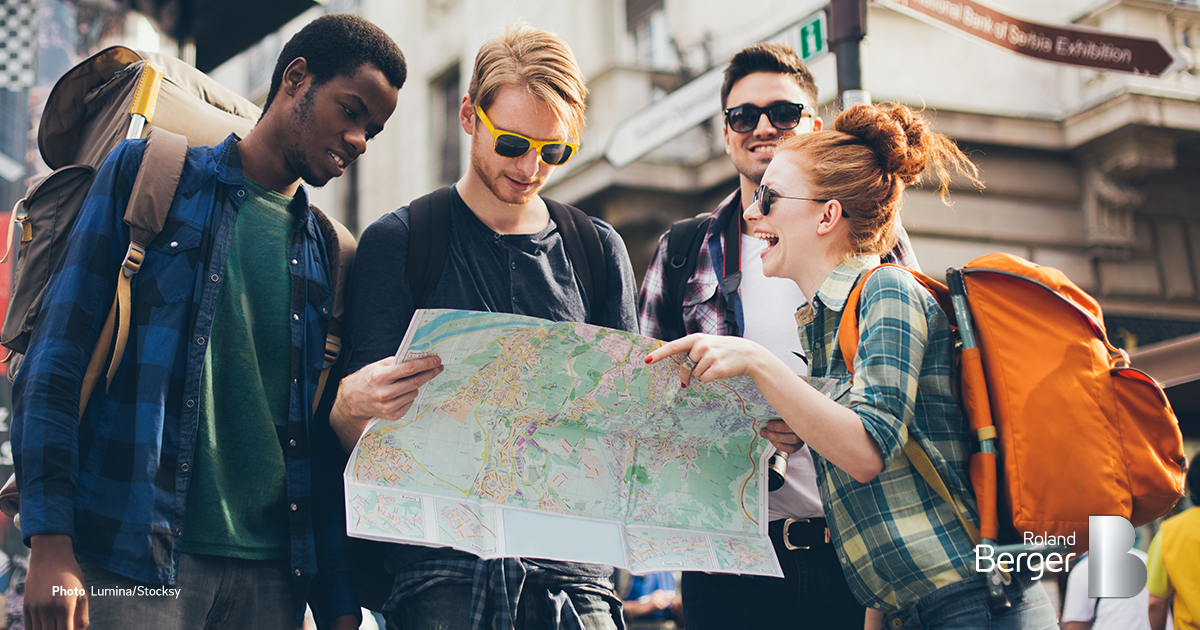
Here is the travel industry’s favorite myth: millennials are lone wolves. Backpack on, AirPods in, no itinerary, no companions. Pure freedom.
It is a compelling image. It is also largely wrong.
The real story of how millennials travel in 2026 is messier, smarter, and far more interesting than any Instagram aesthetic suggests. It is a story about a generation that learned, often through costly mistakes and lonely dinners in foreign cities, that freedom and community are not opposites. They are ingredients in the same trip.
The $3,200 Trip That Changed Everything
Maya Okonkwo was 28 when she booked her first solo international trip, a two-week journey through Southeast Asia in the spring of 2023. She had saved $3,200 over eight months. She told no one her exact itinerary.
The first four days in Chiang Mai were extraordinary. She ate street food alone at midnight, rented a scooter without telling her mother, and hiked to a temple at dawn with nobody waiting back at a hotel room. She felt, she would later say, like herself for the first time in years.
By day nine, sitting in a guesthouse in Pai with a stomach bug and a dead phone charger, the freedom felt different. It felt like a weight.
She spent the final five days of her trip tagging along with a small group tour she found through a local adventure company. Eight strangers, a guide named Noi, and a van that smelled like sunscreen. She spent roughly $420 extra for those five days. It was, she later told a friend, the best money she had ever spent on travel.
Maya’s experience is not unique. It is, according to travel researchers and booking data, quietly becoming the defining pattern of millennial travel in 2026.
Why the Solo Travel Boom Is Real, and Also Misunderstood
The numbers on solo travel are not in dispute. A Forbes travel trends report found that 76% of millennials and Gen Z travelers planned solo trips heading into 2025. A Princeton Survey Research Associates study found that 58% of millennials are willing to travel alone, compared to 47% of older generations. Data from United Airlines puts the figure even higher: 65% of millennial flyers travel solo.
These numbers are real. What they obscure is what happens after the plane lands.
Solo travel, as industry analysts have noted, is easier to plan and allows travelers to pursue their own interests without group compromises. That is its core appeal. But easier to plan does not mean easier to sustain emotionally across ten or fourteen days in an unfamiliar country.
| Travel Style | Average Daily Cost | Key Advantage | Key Risk |
|---|---|---|---|
| Pure Solo | $65–$120 | Maximum flexibility | Isolation, higher per-person costs |
| Traditional Group Tour | $180–$350 | Safety, logistics handled | Rigid itinerary, age mismatch |
| Hybrid (Solo + Group Segments) | $90–$160 | Freedom with built-in community | Requires more planning upfront |
| Adventure Group Tours (Millennial-Focused) | $110–$200 | Like-minded peers, curated experiences | Less spontaneity |
The travel industry has started catching up to this reality. Euronews Travel reported that adventure travel companies have become particularly popular with millennials precisely because they cater to solo travelers who want to join a group of like-minded people. You go alone. You travel together. You leave with both memories and contact details.
The Turning Point Nobody in Tourism Predicted
The shift accelerated after 2022. Post-pandemic travel surged, but so did a quieter crisis: solo travelers returning home reporting deep satisfaction with their independence and persistent loneliness underneath it.
Mental health conversations that had moved into the mainstream during lockdowns did not disappear when borders reopened. Millennials, already fluent in the language of self-care and intentional living, began applying that same vocabulary to how they designed trips.
“I wanted to feel changed by the trip, not just to have gone somewhere. That meant I needed other people at some point — not a tour guide reading from a script, but actual humans who were also figuring things out.”
— Traveler interviewed for this article, 31, Portland
This desire, to feel changed rather than simply validated, maps directly onto what researchers have documented about millennial and Gen Z travel motivations. It is less about the photograph at the landmark and more about the conversation at the table three hours after the landmark visit.
The shift documented by Travel and Tour World describes this as a new tourism revolution, one driven not by budget airlines or travel apps, though both matter, but by a fundamental redefinition of what a trip is supposed to do for the person taking it.
What the Hybrid Model Actually Looks Like on the Ground
Daniel Ferreira, 34, spent seventeen days in Morocco in January 2026. He budgeted $2,800 total including flights from Toronto. The first week he moved alone through Marrakech and the Atlas Mountains, booking accommodation the morning he arrived in each new place. He ate alone, got lost twice, and negotiated his own prices in the souks.
Week two, he joined a five-day desert tour through a small adventure company operating out of Marrakech. Cost: $380 per person. Six travelers, two guides, three nationalities. They slept in desert camps, rode camels at dusk, and argued amiably about football around a fire in the Sahara.
The final three days, he peeled away from the group and traveled alone to Essaouira, a coastal city he had read about on a blog. He sat on a wall above the Atlantic and felt, he said, like he had earned the silence.
His total spend came in at $2,650, slightly under budget. But he was clear: the budget was never the point. The architecture of the trip was.
The Costs Nobody Talks About
Not every hybrid trip resolves neatly. Priya Nair, 29, booked a solo trip to Colombia in late 2025, intending to join a group tour in Cartagena midway through. The tour operator she had booked online canceled four days before she arrived, citing low enrollment. She was out $290 with no refund, a common risk when booking smaller operators without cancellation protection.
She spent those middle days alone in Cartagena, which turned out to be fine. But the financial sting and the anxiety of scrambling to replan in a country where she did not speak the language fluently stayed with her.
She came home with good memories and a firm rule: always book group segments through operators with verifiable cancellation policies, and never let a group experience represent more than 30% of her total trip budget. It is the kind of lesson that costs real money to learn.
Millennials spending over $200 billion annually on travel globally are not an abstraction. They are people making specific decisions with specific savings, absorbing specific risks, and recalibrating after specific failures.
What This Means for Tourism — and for the Travelers Themselves
The travel industry is responding, though unevenly. Adventure travel companies have multiplied their millennial-focused offerings since 2022. Small-group formats, defined as eight to twelve travelers, have become the dominant product for operators targeting the 25-to-40 demographic. Departure dates align with long weekends and remote-work schedules. Itineraries build in free days by design.
65% of millennials prioritize budget-friendly options, yet remain willing to spend significantly on unique experiences. That tension is not a contradiction. It is a precise description of how this generation approaches value: ruthless on category costs, generous on moments that cannot be replicated.
What this generation figured out, not through travel journalism or tourism board campaigns but through trial and expensive error, is that the best trip is not defined by how alone or how accompanied you are. It is defined by whether you were present for the parts that mattered.
Maya still thinks about Noi, the guide in the van that smelled like sunscreen. She never got her contact information. That is a detail she has not forgotten, even three years later.
Maybe freedom is not about going alone. Maybe it is about knowing when to let someone else hold the map.


Leave a Reply