
▶ Read transcript
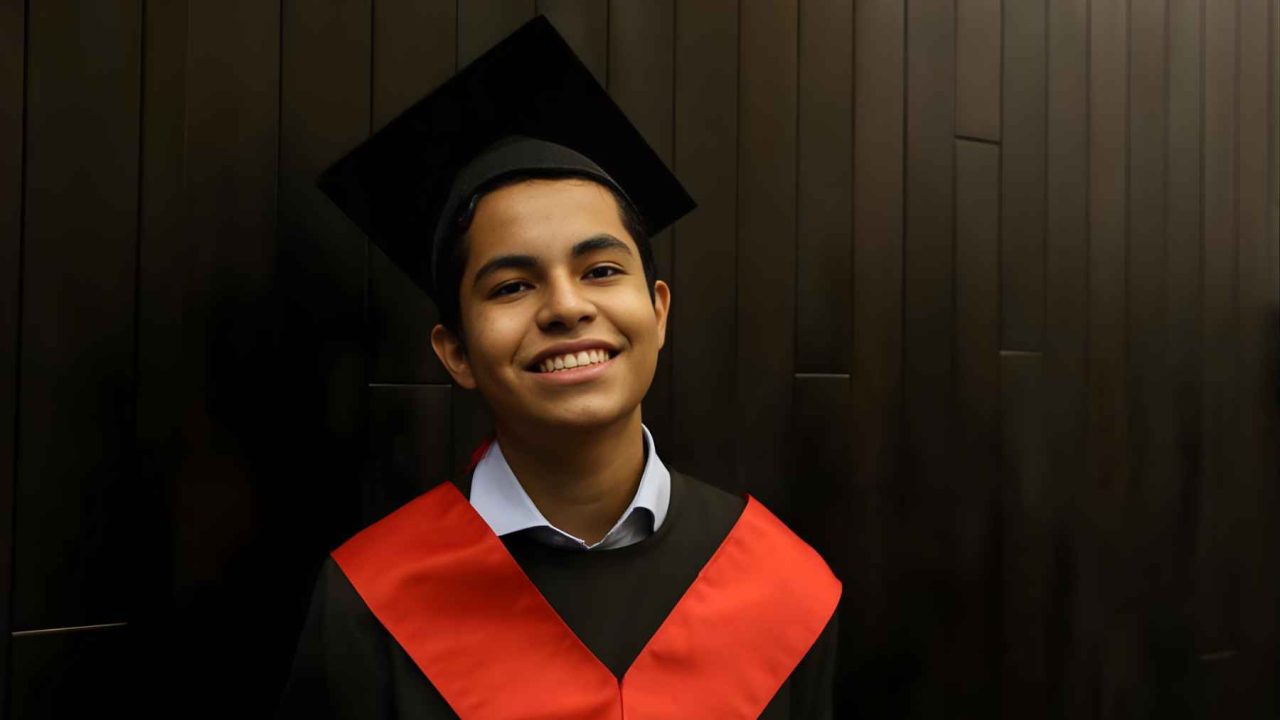
Here’s what you need to know about a story that challenges how we think about education and diagnosis. Ian Emmanuel González Santos, a student from Puerto Vallarta, Mexico, was flagged by his school for attention deficit disorder. He couldn’t sit still, didn’t engage, and was even bullied by classmates. But the reality was very different. By age 12, he became the youngest molecular biologist in the world. At 13, the University of Guadalajara awarded him a degree, and by 15, he’s pursuing doctoral-level research in metagenomics and plastic degradation using bacteria. His story highlights a well-documented problem: the symptoms of giftedness and ADHD can look nearly identical in a classroom. A bored, understimulated child disengages in ways that mimic attention deficit on a teacher’s checklist. Experts say both conditions can even coexist. The takeaway here is straightforward. If your child is flagged for attention issues, push for a comprehensive evaluation that screens for both ADHD and giftedness simultaneously. That dual approach gives you the most accurate picture and prevents mislabeling in either direction.
The most dangerous learning disability in the modern classroom isn’t a disorder at all. It’s boredom. Ian Emmanuel González Santos, a Mexican student from Puerto Vallarta, Jalisco, was told by his school that he had attention deficit disorder. He couldn’t sit still. He didn’t engage. He didn’t fit the mold. By age 12, he became the youngest molecular biologist in the world.
That gap between diagnosis and reality should alarm every parent, educator, and policymaker. Because Ian’s story isn’t just about one gifted child slipping through the cracks. It’s about a system that routinely mistakes brilliance for brokenness.
A Prodigy Labeled as a Problem Child
Ian Emmanuel González Santos learned to read and speak fluently at three years old. His fascination with molecular biology emerged shortly after. At age six, he scored an exceptionally high IQ. By any reasonable measure, he was extraordinary.
But school didn’t see it that way. His teachers flagged him for attention deficit disorder. He was bullied by classmates for being different, for not being as athletic as the other kids. The institution designed to cultivate his potential was instead pathologizing it.
“They told me I had attention deficit disorder.”
— Ian Emmanuel González Santos
It took the intervention of educators and family members who recognized his gifts to redirect his trajectory. They moved him into advanced coursework. The result was staggering. At age 13, the University of Guadalajara recognized González Santos as its youngest graduate, awarding him a Químico Farmacéutico Biólogo degree. As of late 2025, at just 15, he is pursuing doctoral-level work in molecular biology.
His doctoral research focuses on metagenomics, studying genetic material present in Mexico’s largest lake for water safety research. He also works on breaking down PET plastic using bacteria. And somehow, he still trains for track and field, plays music, and makes time for video games.
Are Schools Designed to Suppress Gifted Children?
Ian’s experience is not isolated. Critics of conventional education argue that standardized classrooms are built for the median student. Children who deviate, whether they learn faster, think differently, or simply can’t tolerate repetition, get labeled.
| Trait | ADHD Interpretation | Giftedness Interpretation |
|---|---|---|
| Inability to focus on tasks | Distractibility, executive dysfunction | Understimulation, need for challenge |
| Restlessness in class | Hyperactivity | Intellectual energy without outlet |
| Difficulty with authority | Oppositional behavior | Questioning mind, need for autonomy |
| Emotional intensity | Emotional dysregulation | Overexcitabilities (Dabrowski’s theory) |
| Inconsistent performance | Attention deficit | Selective engagement based on interest |
The overlap between giftedness and ADHD symptoms is well documented. A child who reads at a college level but is stuck doing second-grade worksheets will inevitably disengage. That disengagement looks identical to attention deficit on a teacher’s checklist.
Proponents of this view point to systemic issues. Overcrowded classrooms. Underfunded gifted programs. Teachers trained to identify deficits, not strengths. In this framework, Ian Emmanuel wasn’t the one with the problem. The system was.
ADHD Is Real, and Misdiagnosis Cuts Both Ways
Defenders of the diagnostic framework push back hard. ADHD is a neurological condition with decades of research behind it. It affects executive function, working memory, and impulse control in measurable, replicable ways. Dismissing a diagnosis because a child later succeeds is survivorship bias at its most dangerous.
For every Ian Emmanuel who was mislabeled, there are thousands of children whose ADHD is real and who benefit enormously from early identification and support. Medication, behavioral therapy, and classroom accommodations have transformed lives. The risk of under-diagnosis is just as severe as over-diagnosis.
Moreover, the argument goes, Ian’s success doesn’t prove the school was wrong to flag him. It proves the system worked, eventually. Someone noticed he needed different support. He got it. The initial label may have been inaccurate, but the process of evaluation led to a better outcome.
Your 7-year-old scores in the top 1% on cognitive tests but refuses to complete classwork, disrupts lessons, and has been flagged by teachers for possible ADHD. The school recommends a clinical evaluation focused on attention deficit.
This position also highlights that gifted programs carry their own risks. Accelerating children too quickly can create social isolation, emotional stress, and burnout. Not every child who is bored in class is a prodigy. Some genuinely need help focusing.
What the Research Actually Reveals About Misdiagnosis
The data paints a complicated picture. Studies have consistently shown that younger children in a grade cohort are significantly more likely to receive an ADHD diagnosis. A child born in December who enters a class where most peers were born in January is nearly a year less mature, developmentally. That immaturity gets medicalized.
Meanwhile, Ian’s research touches one of the most urgent scientific challenges of this century. The OECD estimates that global plastic production jumped to about 507 million U.S. tons in 2019, up from roughly 258 million U.S. tons in 2000. Plastic waste reached about 389 million U.S. tons that same year, with approximately 24 million U.S. tons leaking directly into the environment.
The plastics life cycle accounts for an estimated 3.4% of global greenhouse gas emissions. Ian’s work on breaking down PET plastic using bacteria builds on a landmark 2016 Science paper that identified Ideonella sakaiensis 201-F6, a bacterium capable of using PET as a major carbon and energy source through hydrolytic enzymes.
A child who was told he couldn’t pay attention is now working at the frontier of environmental science. The irony is almost too neat.
The Verdict: Schools Need Better Lenses, Not Better Labels
Both sides of this debate hold legitimate ground. ADHD is real. Giftedness is real. And the overlap between them creates a diagnostic minefield that most schools are woefully unequipped to navigate.
But here’s the editorial position: the burden of proof should not fall on the child. When a six-year-old with an exceptional IQ is told he has a deficit, the system has failed its most basic obligation. Identification should be holistic. It should consider strengths alongside struggles. And it should never default to pathology when curiosity is the more parsimonious explanation.
Ian’s case is extreme. Most mislabeled children won’t become the youngest graduate of a major university. But the principle holds. Every child who is bored, restless, or disengaged deserves an evaluation that asks “what does this child need?” before it asks “what is wrong with this child?”
What Ian Emmanuel’s Story Means for Education and Science
The implications extend far beyond one gifted teenager in Jalisco. As neurodiversity awareness grows, the conversation about ADHD diagnosis is shifting. Parents are asking harder questions. Researchers are developing more nuanced screening tools. Some school districts are experimenting with strength-based assessments.
But progress is slow. Gifted education remains chronically underfunded in most countries. Teacher training programs spend far more time on deficit identification than talent development. And the cultural narrative still frames the restless child as the problem child.
Ian Emmanuel González Santos challenges that narrative with his very existence. He reads genetic material from lake water. He trains for track meets. He plays video games. He is, by every measure, a complete human being who was almost reduced to a checklist diagnosis.
The next Ian Emmanuel might not have a family that fights for him. The next one might accept the label, take the medication, and never discover that the real issue was a classroom too small for a mind that big. That possibility should keep every educator awake at night.
Because the most expensive thing a society can waste isn’t plastic. It’s potential.




Leave a Reply