
▶ Read transcript
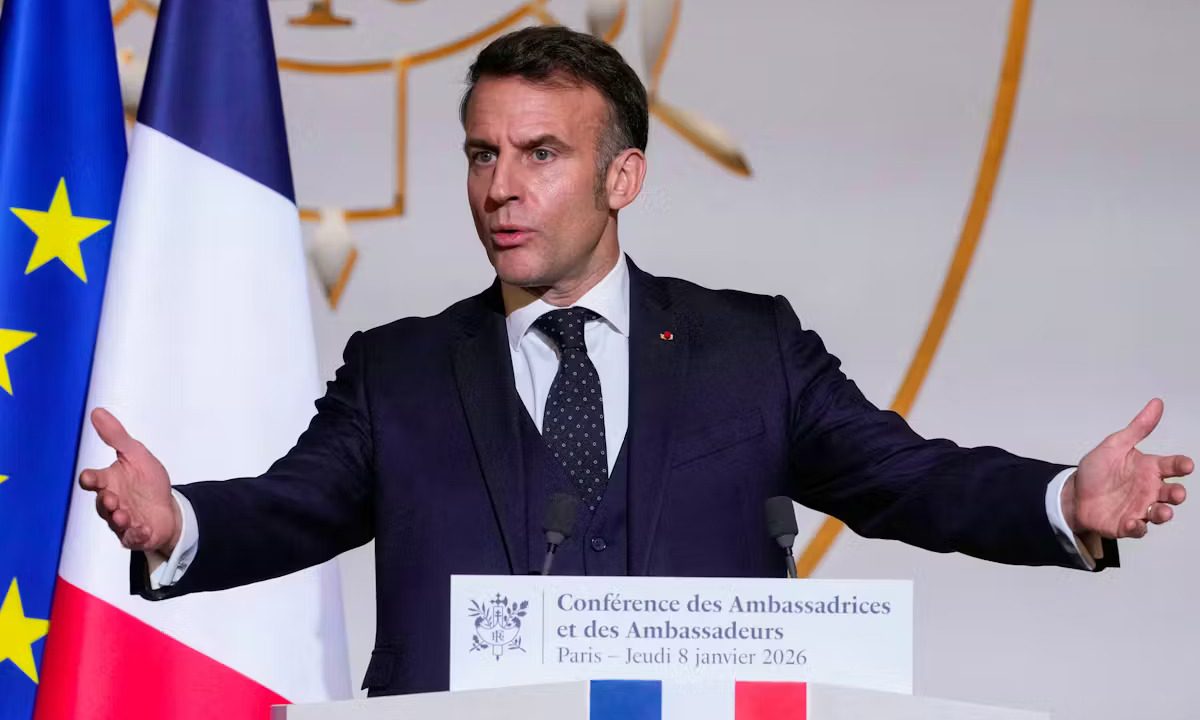
Here’s what you need to know about a campus opening that’s quietly reshaping diplomacy between France and Morocco. A new university campus called the Paul Pascon campus just opened in Laayoune, a city in Morocco’s southern Saharan provinces. French Ambassador Christophe Lecourtier traveled there personally for the inauguration, and his visit extended all the way to Dakhla, signaling this was serious diplomatic business, not a photo opportunity. The campus is named after a French-Moroccan sociologist, and its location is a deliberate statement that Morocco intends to expand higher education into its southern regions. To understand why France is paying such close attention, consider this number: nearly five million French tourists visited Morocco in 2023, making up a third of all international arrivals. That kind of connection runs deep. If you’re watching France-Africa relations evolve, keep your eye on Morocco’s southern provinces. That’s where the story is developing fastest.
Yasmine had studied French literature in Rabat for three years before she ever set foot in the southern provinces. When she finally made the drive toward Laayoune, the landscape shifted so dramatically that she pulled over just to take it in: red earth, flat sky, a horizon that felt borrowed from another planet. She had come for a campus opening. She stayed, she said later, because something about the place felt like the future arriving early.
That feeling was not hers alone. On the day French Ambassador Christophe Lecourtier traveled to Laayoune for the official inauguration of the Paul Pascon campus, the atmosphere carried the particular electricity of an event that is both symbolic and deeply practical. Education, diplomacy, and travel were converging in a city that many outside Morocco still struggle to locate on a map.
The Paul Pascon Campus and What It Represents for Southern Morocco
The new campus bears the name of Paul Pascon, a French-Moroccan sociologist whose work on rural Morocco in the mid-twentieth century remains foundational in North African studies. Naming an institution after him in Laayoune is a deliberate act of memory. It acknowledges the long intellectual thread connecting France and Morocco, one that runs far deeper than tourism statistics or trade agreements.
Laayoune sits in Morocco’s southern provinces, a region the kingdom has invested in heavily over the past decade. Infrastructure projects, economic zones, and now higher education facilities have been arriving with increasing regularity. The Paul Pascon campus is not simply another building. It is a statement about where Morocco sees its academic future expanding.
Ambassador Lecourtier’s presence was not ceremonial window-dressing. His visit to the southern provinces included meetings, tours, and conversations that, according to reporting by Hespress, extended to Dakhla as well. The trip was a full diplomatic engagement with a region that both countries regard as increasingly significant.
4.88 Million French Visitors and the Weight of a Number
To understand why a French ambassador traveling to Laayoune matters, you need one statistic. In 2023, 4.88 million French visitors traveled to Morocco, representing 33 percent of total tourist arrivals to the kingdom. That is not a bilateral relationship. That is a migration of affection, repeated annually, driven by something more durable than marketing campaigns.
Morocco draws French travelers for reasons that resist easy categorization. The landscapes shift from Atlantic coastline to Saharan dunes within a single day’s drive. The food carries centuries of Andalusian, Berber, and Arab influence. The cost of living remains genuinely affordable compared to European alternatives. And the cultural proximity, shaped by decades of shared history, means French visitors rarely feel entirely foreign.
But the relationship between France and Morocco has always been more complicated than a tourism brochure suggests. The French Ministry of Foreign Affairs describes bilateral relations marked by “intense, regular dialogue since the mid-1990s.” That phrasing, diplomatic and measured, conceals decades of negotiation, tension, and genuine warmth operating simultaneously.
| Dimension | France-Morocco Detail |
|---|---|
| Tourism volume (2023) | 4.88 million French visitors, 33% of total arrivals |
| Diplomatic dialogue | Intense, regular contact since mid-1990s |
| Education investment | Paul Pascon campus inauguration, Laayoune |
| Ambassador’s southern visit | Laayoune and Dakhla, meetings and institutional tours |
| Relationship framing | Lecourtier: France-Africa ties “being redefined” |
Lecourtier’s Vision: Redefining What France Means in Africa
Christophe Lecourtier has been unusually candid for a diplomat. At the Dakhla Economic Forum, he stated plainly that France’s relationship with Africa is “in the process of being redefined,” and that this transformation is taking shape in Morocco. That is a significant admission from someone in his position.
“France’s relationship with Africa is in the process of being redefined, and this transformation is taking shape in Morocco.”
— Christophe Lecourtier, French Ambassador to Morocco, at the Dakhla Economic Forum
France has faced significant pushback across sub-Saharan Africa in recent years, with several nations reassessing or ending French military and diplomatic presence. Morocco, by contrast, has deepened its engagement with Paris. The inauguration of the Paul Pascon campus fits into a broader pattern: France investing in Moroccan institutions, and Morocco welcoming that investment as part of its own regional ambitions.
For travelers, this shift carries practical meaning. When diplomatic ties between two countries strengthen at the institutional level, the infrastructure that supports movement between them tends to improve. Visa processing, academic exchange programs, bilateral tourism agreements, and direct flight routes all benefit from the kind of high-level engagement that Lecourtier’s Laayoune visit represents.
Do you have the ability to travel to Morocco's southern provinces, including Laayoune?
Are you a researcher, student, or educator in North African or Saharan studies?
Are you comfortable traveling through remote desert landscapes with dramatic terrain changes?
Consider engaging with the Paul Pascon Campus remotely through its academic publications or online resources. The intellectual legacy of Paul Pascon in North African sociology is accessible from anywhere and offers rich insight into French-Moroccan relations.
Are you comfortable traveling through remote desert landscapes with dramatic terrain changes?
The campus may not be a primary destination for you right now, but the broader story of Laayoune's development and Morocco's southern provinces is worth following as it reshapes regional geopolitics and education access.
Do you have an interest in the intersection of diplomacy, education, and regional development?
Plan your visit with logistical support. Laayoune is reachable by air and road, but the Saharan landscape requires preparation. Consider joining an organized academic delegation or cultural tour to make the journey more manageable.
Can you coordinate your visit around an official academic event or campus program?
You can still visit Laayoune for its unique Saharan landscape and urban development story. The city offers a striking environment even for travelers whose primary interest is geography or architecture rather than diplomacy or education.
You are an ideal candidate for a meaningful visit. Attending an official inauguration, lecture series, or academic conference at the Paul Pascon Campus will give you direct access to the intellectual and diplomatic currents reshaping France-Morocco relations in the southern provinces.
Plan an independent visit to the campus and Laayoune. Even outside formal events, the campus and city offer compelling insight into Morocco's investment in its southern provinces and the enduring cultural ties between France and Morocco.
What the Laayoune Visit Means for Travelers Considering Southern Morocco
Most international visitors to Morocco arrive in Marrakech, Casablanca, or Fes. The southern provinces remain a road less traveled, which is precisely what makes them compelling to a certain kind of traveler. Laayoune, with its wide boulevards and Atlantic proximity, feels unlike anywhere else in the country.
The inauguration of a university campus named after a respected Franco-Moroccan intellectual sends a message to prospective students, researchers, and academic tourists. Laayoune is positioning itself as a place where serious intellectual work happens. That is a draw for a different demographic than the medina-and-desert crowd, and it expands Morocco’s appeal in ways that pure tourism marketing cannot.
Yasmine, back in her car after that roadside pause, eventually reached the campus. She described the building as modest but purposeful, the kind of architecture that says we are here to work. The ceremony was attended by officials, faculty, students, and a French ambassador who had flown south specifically to stand in that room. The gesture was not lost on anyone present.
The Quiet Architecture of a Relationship Built Over Decades
There is a version of this story that focuses entirely on geopolitics: France recalibrating its African strategy, Morocco asserting sovereignty over its southern territories, two governments finding mutual advantage in cooperation. That version is accurate, but incomplete.
The fuller picture includes millions of ordinary French citizens who board planes to Agadir every winter, Moroccan students who pursue graduate degrees in Lyon and Toulouse, families split across both countries who navigate two languages and two sets of bureaucratic expectations every time they visit relatives. The Paul Pascon campus, named for a man who embodied exactly that kind of cross-cultural intellectual life, is a monument to that fuller picture.
What strikes observers about Lecourtier’s willingness to travel to Laayoune, rather than simply sending a representative, is the signal it sends about French priorities. Southern Morocco is no longer a diplomatic afterthought. The region is being treated as a serious partner in a relationship that both countries describe, with increasing frequency, as exceptional.
For travelers, the lesson may be simpler than the diplomats intend. The places that governments start paying attention to tend to be the places that, a few years later, everyone wishes they had visited before the crowds arrived. Laayoune is still quiet. The campus is new. The ambassador has already been and gone.
The question is not whether southern Morocco will change. It already is. The question is whether you will see it before or after it becomes familiar.
Frequently Asked Questions
Frequently Asked Questions

You Might Also Like
Singapore Quietly Pushed Its SAF Levy to 2027 — And Middle East Tensions Explain Why
Singapore has made a deliberate choice to put its aviation decarbonisation timeline on hold —…
Kerala’s Mechanical Elephant Safari Wins PETA India’s Golden Award
Kerala Tourism wins PETA India's Golden Elephant Protection Award for its mechanical elephant safari —…
Kentucky Joins Five States as Wildfires Push US Tourism to a Breaking Point
Wildfires are no longer a problem confined to the American West. As of late March…
Leave a Reply